A vision inspection system contains the technology that is based on image processing and specifically used for automating the inspection processes in production lines in many different industries. Vision inspection systems allow for the inspection and evaluation of product quality by computers through the use of industrial lights, cameras, and computer vision software. Read More…
When it comes to machine vision systems, we have the tools to get the job done right. We work hard to provide the best solutions and products to meet our customers’ demand. It is our goal to work with you from start to finish on all aspects of design and production. We will do our best to provide the solution to even your most challenging requirements. Find out more by contacting us today!
Our machine vision systems are used around the world in millions of applications. We believe in creating products that work, and our customers trust us to create innovative and effective designs they can rely on. You will find that we face even the most difficult challenges with ease. Contact us today to learn more about how we can help you!
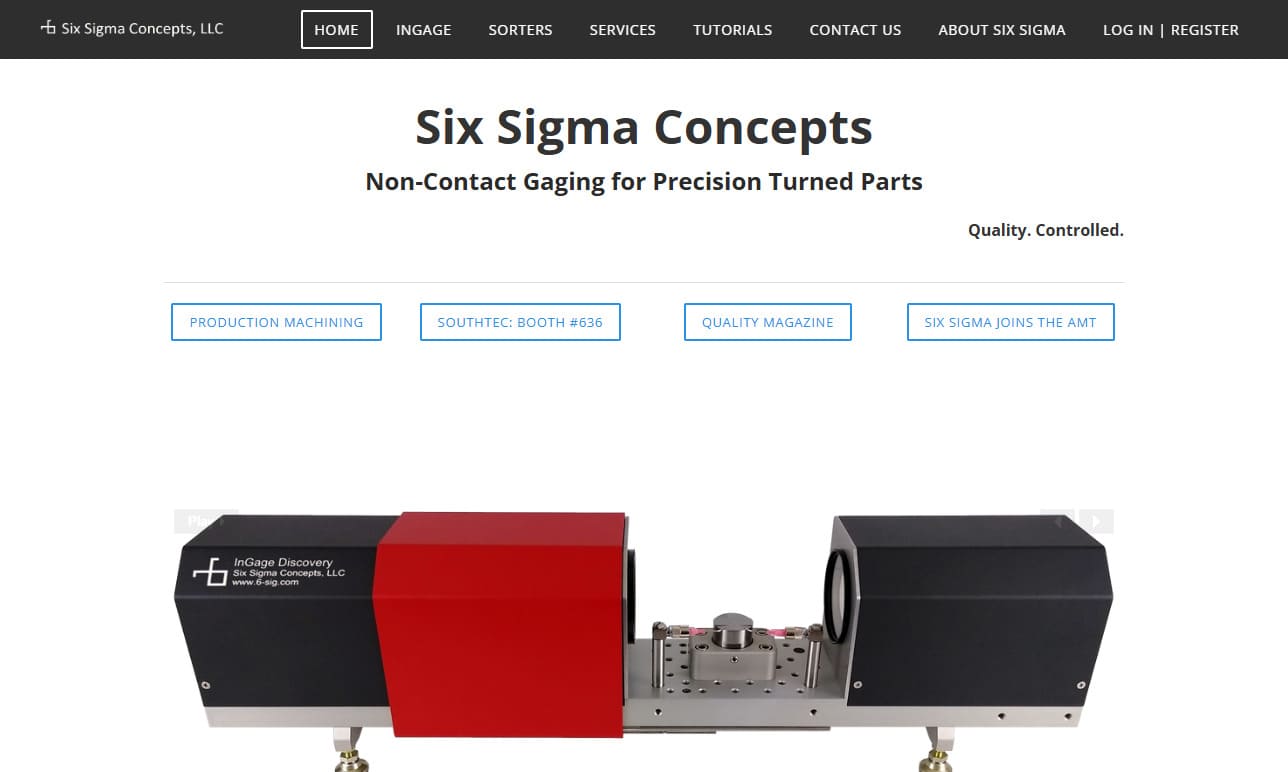
At Six Sigma Concepts, LLC, we specialize in designing and integrating advanced machine vision systems that bring precision, consistency, and intelligence to modern manufacturing. We combine engineering expertise with cutting-edge imaging technologies to deliver custom vision solutions that automate inspection, measurement, and process control with remarkable accuracy.
Edmund Optics is a leading optical manufacturer, offering world-class components, assemblies, and services. We can design custom lenses, optical prisms, beamsplitters, optical filters, windows, and laser optics, while offering a range of single/multi-layer coating options.


More Vision Inspection System Manufacturers
What is a Vision Inspection System?
Vision inspection systems, also referred to as machine vision systems or automated optical inspection (AOI) systems, are advanced technology platforms engineered to perform high-speed, reliable, and accurate quality control within industrial and manufacturing environments. Leveraging sophisticated image acquisition, processing, and analysis technologies, vision inspection systems automate the visual inspection process to identify defects, verify assembly integrity, and ensure adherence to product specifications.

These systems play a pivotal role in ensuring product quality and optimizing production line efficiency. By automating the inspection process, companies can free skilled labor from repetitive, error-prone tasks, enabling staff to focus on more value-added activities. Additionally, vision inspection technology digitizes the inspection workflow, generating actionable data and comprehensive documentation. This data can be used to support process improvement, regulatory compliance, and traceability for industries with strict quality standards.
Vision inspection systems are at the forefront of Industry 4.0 and smart manufacturing initiatives. Their versatility makes them indispensable across a wide range of sectors, from electronics manufacturing (PCB testing, solder joint inspection), pharmaceutical production (tablet counting, blister pack verification), and food and beverage processing (label verification, contamination detection) to automotive assembly (parts verification, surface defect detection), packaging, and printing industries. As more industries recognize the cost-saving and quality-improving potential of vision inspection, adoption is accelerating worldwide.
Looking to improve product quality or streamline compliance? Explore how vision inspection systems can be tailored to your application.
Are you wondering: How can vision inspection automation reduce error rates in your facility? Or What types of products benefit most from machine vision inspection? Read on for an in-depth look at system components, working principles, use cases, and selection advice to guide your investment.
The Components of a Vision Inspection System
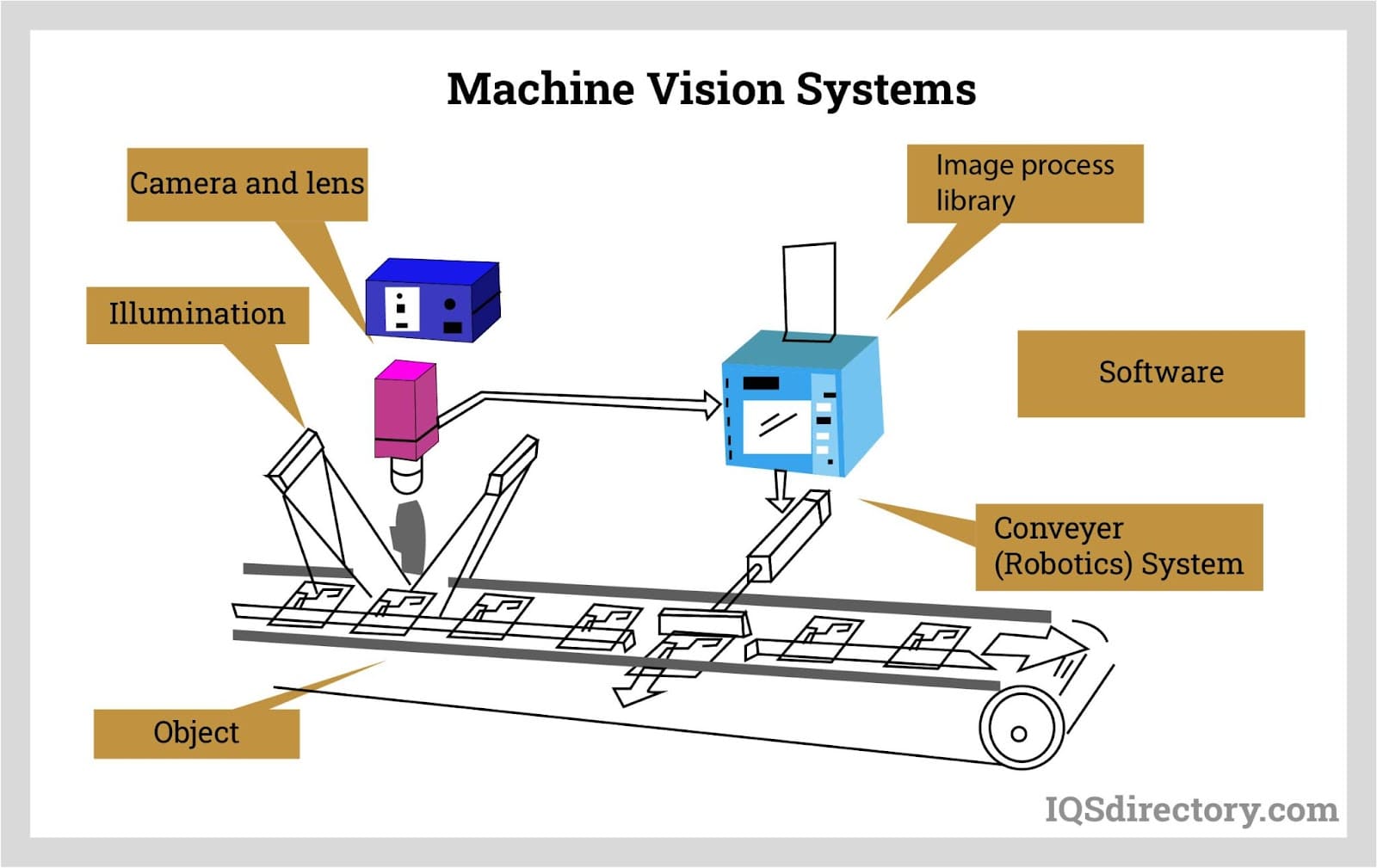
To understand how a vision inspection system operates, it’s crucial to examine its core components. Each part contributes to the overall accuracy, speed, and versatility of the system:
- Presence Sensors: Detect the arrival or passage of objects, triggering the image capture process and ensuring precise synchronization with the production line.
- Industrial Cameras: Act as the “eyes” of the system, acquiring high-resolution images or video streams of products or assemblies. Camera types vary widely, ranging from area-scan and line-scan to 3D and multispectral cameras, each optimized for different inspection tasks.
- Lighting & Optical Housing: Proper illumination is essential for image clarity. Systems may use LED, diffuse, coaxial, or backlighting, tailored to highlight features or defects of interest. Specialized housing protects optics from dust, vibration, and harsh environments.
- Programmable Logic Controller (PLC): Manages system logic, coordinating signals between sensors, cameras, actuators, and other hardware. PLCs ensure rapid response and integration with existing automation infrastructure.
- Industrial Computer & Vision Software: High-performance computing hardware runs sophisticated machine vision software for real-time image analysis, defect detection, pattern recognition, and data visualization. Software flexibility is key to customizing inspection criteria.
- Human-Machine Interface (HMI) or Operator Panel: Provides an intuitive dashboard for operators to monitor inspection results, adjust settings, and review images or alerts. Modern HMIs may include touchscreens, remote access, and integration with plant MES or ERP systems.
Not sure which camera or lighting is right for your product? Ask: What vision hardware best fits my inspection environment and defect types?
How Vision Inspection Works
Image Acquisition
As an object approaches the inspection zone on a conveyor or assembly line, a presence sensor triggers the vision system. The lighting solution activates, and one or more industrial cameras capture crisp, high-contrast images of the product in real time. Multiple imaging modalities (2D, 3D, color, infrared) may be used depending on the inspection requirements.


Image Processing and Analysis
Advanced image processing algorithms—including edge detection, pattern matching, segmentation, and deep learning—analyze the raw visual data. Pre-processing (such as filtering or contrast enhancement) isolates features of interest (like barcodes, welds, or surface textures). The system then extracts relevant measurements or classifications, creating a detailed digital profile of each item.
Result Evaluation
The vision software compares extracted features and measurements against predefined quality thresholds or tolerances. This step determines whether a product meets specifications (pass/fail) or requires further review. For advanced traceability, systems can log detailed inspection data for every unit.
Decision & Sorting
Based on the evaluation, the system issues commands to downstream equipment such as reject gates, diverters, or labeling machines. Defective products are automatically separated from compliant goods, minimizing rework costs and ensuring only high-quality items reach customers.
Process Control & Data Feedback
Modern vision inspection systems don’t just spot defects—they generate rich analytics to identify trends, bottlenecks, or recurring issues. Operators and engineers can access dashboards that visualize real-time production data, enabling proactive process adjustments. Integration with manufacturing execution systems (MES) and quality management systems (QMS) delivers end-to-end traceability and continuous improvement.
Curious about vision inspection workflow? Try searching: How does automated visual inspection improve yield in electronics or pharmaceutical manufacturing?
Types of Vision Inspection Systems
Choosing the right vision inspection system architecture is essential for balancing performance, scalability, and cost. The main types include:
PC-Based Vision Inspection Systems
These systems employ an industrial-grade computer as the central processing unit, managing multiple cameras, lighting controllers, and input/output devices. PC-based platforms deliver maximum computing power and flexibility, supporting high-resolution imaging, complex inspection algorithms, and integration with robotics or factory networks. They are ideal for demanding environments such as automotive manufacturing, semiconductor inspection, and multi-stage assembly lines. However, their footprint and upfront investment are higher compared to other models.
- Typical Use Cases: High-speed electronics inspection, automotive paint defect detection, pharmaceutical blister pack verification.
- Decision Factors: Required throughput, complexity of inspections, need for multi-camera support, custom software integration.

Compact Vision Inspection Systems
Compact systems, sometimes called embedded vision systems, offer a balance between cost and performance. They combine a small-form-factor computer or vision controller with select camera and lighting components, making them ideal for space-constrained installations or moderate-speed lines. While less powerful than full PC-based solutions, they are sufficient for many packaging, labeling, or assembly verification tasks and can be deployed with minimal integration effort.
- Typical Use Cases: Label verification, cap alignment, fill-level inspection, packaging seal checks.
- Decision Factors: Available space, budget, required inspection speed, integration with existing equipment.
Smart Camera-Based Vision Systems
These “all-in-one” systems integrate the camera, processor, and I/O in a single compact unit. Smart camera vision systems are cost-effective, easy to install, and ideal for straightforward inspection tasks. They are often used in industries where a single critical parameter needs monitoring, such as presence/absence detection or barcode reading. While limited in flexibility and computation compared to PC-based systems, they offer a quick return on investment for simple automation upgrades.
- Typical Use Cases: Barcode and 2D code reading, color sorting, basic surface defect detection, packaging checks.
- Decision Factors: Simplicity of application, need for rapid deployment, budget constraints.
Wondering which system best matches your requirements? Ask: Should I choose a smart camera or a PC-based vision system for my production line?
Applications of Vision Inspection Systems
Vision inspection systems are transforming quality assurance and process control across countless industries. Explore common and emerging applications:
- Food and Beverage Appearance Inspection: Detects product color, shape, and surface defects; ensures package integrity and label accuracy; verifies fill levels and seals.
- Presence or Absence Verification: Confirms that critical components (screws, caps, labels) are present or correctly placed, reducing the risk of recalls or compliance issues.
- Color Inspection: Identifies color deviations or contamination in products ranging from pharmaceuticals to plastics, ensuring brand consistency and safety.
- Orientation and Alignment Checks: Validates that products or subassemblies are correctly oriented for downstream processes such as labeling, sealing, or packaging.
- Label and Barcode Verification: Ensures that printed information is accurate, legible, and matches product specifications. Critical for industries subject to traceability standards.
- Seal and Closure Integrity Inspection: Detects faulty or missing seals, preventing leaks and contamination in food, beverage, and pharmaceutical packaging.
- Foreign Object and Contaminant Detection: Identifies unwanted materials or defects, protecting consumer safety and reducing liability.
- Surface Defect Detection: Finds scratches, dents, or blemishes on metals, plastics, glass, and other materials to ensure cosmetic quality.
- Dimensional Measurement: Performs precise gauging of parts and assemblies to verify compliance with engineering tolerances.
Searching for the right inspection application? Try: What are the leading use cases for machine vision in my industry?
Custom Vision Inspection Solutions
No two manufacturing operations are identical. Leading vision inspection system manufacturers offer tailored solutions, including custom software, optics, and mechanical integration. If your application involves unique products, harsh environments, or regulatory requirements, partnering with an expert system integrator can deliver superior results. Look for partners with experience in your specific industry—be it medical device inspection, electronics, automotive, or consumer goods manufacturing.
Benefits of Vision Inspection Systems
Investing in automated vision inspection delivers measurable and strategic advantages for manufacturers and processors:
- Consistent Automated Quality Control: Machine vision systems deliver repeatable, impartial inspections 24/7, minimizing human error and variability.
- Enhanced Customer Satisfaction: By ensuring only in-spec and defect-free products reach customers, companies strengthen brand reputation and reduce returns or complaints.
- Higher Throughput and Productivity: Automated inspections operate at line speeds that far exceed manual methods, supporting increased capacity and faster order fulfillment.
- Reduced Operational Costs: Lower labor costs, minimized scrap and rework, and early defect detection drive significant savings over time.
- Comprehensive Data Collection & Traceability: Vision systems log inspection results for every product, supporting root-cause analysis, regulatory compliance, and continuous improvement initiatives.
- Process Optimization: Real-time feedback enables operators and engineers to address emerging issues quickly, reducing downtime and improving yield.
- Scalability & Flexibility: Systems can be adapted to new products, packaging types, or quality standards with minimal retooling, future-proofing your investment.
- Regulatory & Compliance Support: Automated inspection assists with meeting industry regulations such as FDA, GMP, ISO, or automotive standards, providing auditable records and full traceability.
Want to quantify your ROI? Ask: What cost savings can I expect from deploying a vision inspection system?
Choosing the Correct Vision Inspection Systems Company
Selecting a vision inspection system supplier is a critical decision that impacts your quality assurance, compliance, and production efficiency for years to come. When evaluating potential partners, consider the following key factors:
- Industry Experience: Does the company have proven expertise with similar products, materials, or regulatory environments?
- System Integration Capability: Can they provide complete turnkey solutions, including hardware, software, and integration with your existing automation or IT infrastructure?
- Customization and Scalability: Are their solutions adaptable to your unique requirements, and can they grow as your needs evolve?
- Support and Training: Is comprehensive support, troubleshooting, and operator training available to maximize uptime and ROI?
- References & Case Studies: Can they provide case studies or client references demonstrating successful deployments?
- Innovation & Technology Leadership: Are they leveraging the latest advancements in AI, deep learning, or hyperspectral imaging to future-proof your inspection process?
To ensure the most productive outcome when purchasing vision inspection systems, we recommend comparing at least five qualified companies using our Vision Inspection Systems directory. Each vision inspection systems supplier has a detailed business profile page highlighting their expertise, capabilities, and industry focus, along with a convenient contact form for direct communication or quote requests. Review each company’s website using our patented website previewer to quickly assess specialization and solution offerings, then use our streamlined RFQ form to connect with multiple vision inspection system vendors at once.
Ready to take the next step? Search: Which vision inspection system supplier is best for my application?
Frequently Asked Questions about Vision Inspection Systems
- What are the main factors influencing vision inspection system cost? The price depends on system complexity, number of cameras, required speed, custom software needs, and integration requirements.
- How difficult is it to retrofit vision inspection onto an existing production line? Many modern systems are designed for easy integration, but consulting an experienced supplier is recommended for optimal results.
- Can vision inspection systems detect subtle or cosmetic defects? Yes, with high-resolution cameras and advanced image analysis, even minor surface flaws or color variations can be reliably identified.
- Is machine learning or AI used in vision inspection? Increasingly, yes—deep learning algorithms enable more robust defect detection, pattern recognition, and adaptability to changing products or conditions.
- What maintenance do vision inspection systems require? Routine cleaning of optical components, periodic calibration, and software updates help ensure ongoing accuracy and performance.