The term machine vision (MV) refers to the technology and methods that engineers use to mimic human vision. Machine vision systems facilitate the precise and accurate performance of tasks, like defect recognition, sorting, guidance, and barcode scanning. In addition, machine vision systems allow engineers to access information on image-based automatic inspection, recognition, and analysis of different parts in production. Read More…
When it comes to machine vision systems, we have the tools to get the job done right. We work hard to provide the best solutions and products to meet our customers’ demand. It is our goal to work with you from start to finish on all aspects of design and production. We will do our best to provide the solution to even your most challenging requirements. Find out more by contacting us today!

Our machine vision systems are used around the world in millions of applications. We believe in creating products that work, and our customers trust us to create innovative and effective designs they can rely on. You will find that we face even the most difficult challenges with ease. Contact us today to learn more about how we can help you!

At Six Sigma Concepts, LLC, we specialize in designing and integrating advanced machine vision systems that bring precision, consistency, and intelligence to modern manufacturing. We combine engineering expertise with cutting-edge imaging technologies to deliver custom vision solutions that automate inspection, measurement, and process control with remarkable accuracy.
Edmund Optics is a leading optical manufacturer, offering world-class components, assemblies, and services. We can design custom lenses, optical prisms, beamsplitters, optical filters, windows, and laser optics, while offering a range of single/multi-layer coating options.

More Machine Vision Manufacturers
The primary objective of machine vision software is to meticulously analyze and evaluate objects by counting, measuring, identifying, or inspecting them against the specific standards established by their developers. Additionally, this sophisticated inspection software provides workers with an intuitive interface, enabling them to monitor production progress and assess the success rate efficiently. For manufacturers and production engineers, machine vision software is a critical tool for automating quality assurance, reducing human error, and increasing throughput in highly competitive industries.
Modern machine vision systems are often tailored to perform specialized functions, with quality control being among the most prevalent applications. Through these advanced automated systems, industries can ensure that their products meet the highest standards of quality and precision, thereby enhancing overall operational excellence and reducing costly defects. Machine vision equipment is widely used in manufacturing automation, industrial inspection, robotics, and process optimization, supporting both discrete and continuous process industries.

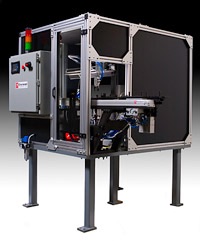
Machine Vision System
Quality Control for Machine Vision Equipment
Quality control encompasses a variety of processes and standards, particularly within the realm of industrial machine vision. In this context, it primarily involves the meticulous oversight of the sorting and inspection of goods and parts on a production line. Automated vision inspection systems are integral to this process, ensuring that each product meets the required specifications in terms of shape, size, color, material, and other programmed criteria. These systems replace subjective manual inspections with consistent, objective measurements, boosting manufacturing quality assurance.
These sophisticated solutions—which include vision inspection systems, optical inspection systems, and laser inspection systems—perform their tasks with remarkable consistency and speed. They are designed to operate repetitively, maintaining high levels of accuracy and magnification, thus ensuring that every product that passes through the production line adheres to established quality standards. The precision and efficiency of these machine vision inspection systems are crucial in maintaining the integrity and reliability of the production process.
Machine vision inspection systems play a crucial role in ensuring the efficient and accurate sorting of products across various industries. For example, in the pharmaceutical sector, machine vision technology is indispensable for automating the fast and precise filling and packaging of prescription medications, over-the-counter drugs, and other pharmaceutical goods. Vision-guided inspection systems reduce the risk of contamination, dosage errors, and packaging defects, helping companies comply with stringent regulatory requirements.
Additionally, in the pulp and paper industry, machine vision streamlines the inspection of paper quality, detecting surface defects, tears, and print errors in real time, which minimizes waste and maximizes operational efficiency. In food and beverage processing, machine vision equipment rapidly inspects products for consistent appearance, correct labeling, and absence of contaminants, supporting food safety and brand reputation.
In the realm of quality inspection, machine vision systems are extensively utilized in the electronics manufacturing and automotive industries. These sectors rely heavily on Automated Guided Vehicle (AGV) equipment, vision-guided robots, and inline inspection stations to inspect products, ensuring they meet stringent quality standards. Beyond finished products, machine vision systems are also employed to scrutinize the parts and components used in manufacturing, such as die casts, molds, PCBs, connectors, and tools. These inspections are performed under high magnification, guaranteeing the integrity and precision of the tools and parts involved in production.
Human safety and security are paramount concerns addressed by machine vision technology. In recycling and waste management facilities, this technology protects workers from handling contaminated or hazardous materials by automating the sorting process. At airports, machine vision systems are integral to the scanning and sorting of baggage, enhancing security, efficiency, and passenger throughput. Moreover, in banking and retail environments, these systems play a vital role in detecting counterfeit bills, thereby preventing fraud and financial loss.
Machine vision technology extends its capabilities to various performance tasks as well. It assists in labeling, food processing, textile machining, facial recognition, barcode reading, optical character recognition, and robotic guidance, showcasing its versatility and importance across different sectors. By integrating machine vision systems, industries can achieve higher levels of accuracy, safety, compliance, and efficiency in their operations.
Are you searching for proven solutions to enhance quality control in your manufacturing process? Browse leading machine vision system suppliers to compare features, integration options, and support services tailored to your industry.
History of Machine Vision Equipment
The evolution of machine vision equipment has been marked by breakthroughs in computer vision, optics, and artificial intelligence. In the 1950s, James J. Gibson pioneered the first machine vision system, a 2D imaging technology aimed at recognizing statistical patterns and achieving optical flow—a concept he developed in the 1940s to describe the perceived motion of surfaces, edges, and objects in a visual scene due to relative motion.
In 1960, MIT PhD candidate Larry Roberts advanced the field by writing a thesis on extracting 3D geometric information from 2D images, sparking widespread interest in image processing and leading to the development of 3D machine imaging. This foundational work paved the way for today’s 3D machine vision systems, which are widely used for depth measurement, object tracking, and robotic guidance in advanced automation environments.
The 1970s saw further progress when MIT introduced a machine vision class in their Artificial Intelligence Lab. Students in this class, including David Marr, who created the first computer vision program in 1978, contributed significantly to advancements such as edge detection and 3D representation of 2D drawings, important for today’s machine learning-based vision inspection.
Machine vision systems soon moved from research labs to the industrial sector, initially used to read codes and symbols. The development of smart cameras and the integration of digital signal processing (DSP) in the 1990s further enhanced these systems, making them more compact, powerful, and adaptable for a wide range of industrial automation tasks.
Today, machine vision systems are more affordable, user-friendly, and practical, playing a crucial role across sectors such as electronics, automotive, packaging, pharmaceuticals, logistics, and food processing. By 2022, the global machine vision market is projected to reach $15.46 billion, underscoring their growing importance in enhancing the accuracy and accessibility of industrial, residential, and commercial applications.
Curious how machine vision technology has revolutionized manufacturing and inspection? Discover industry-leading machine vision solutions and see how their evolution can benefit your operations today.
How Machine Vision Systems Work
Object and image processing in machine vision encompasses various stages such as stitching/registration, filtering, thresholding, pixel counting, segmentation, edge detection, color analysis, blob discovery and manipulation, neural network processing, deep learning, pattern recognition, optical character recognition (OCR), barcode analysis, and gauging/metrology. These processes typically culminate in a comparison against target values to determine a “pass or fail” outcome, which is essential for automated quality control and defect detection.
Stitching (Registration): A critical step in vision systems where adjacent images, whether 2D or 3D, are combined to create a comprehensive picture. This process ensures that the final image is cohesive and provides more detailed information than the individual images alone, which is particularly valuable in high-resolution surface inspection and printed circuit board (PCB) analysis.
Thresholding: A machine vision process that separates different sections of an image. By using a predefined gray value, the system converts grayscale image sections into binary form, changing them to either black or white. This transformation enhances the distinction between various parts of the image, facilitating further analysis. Thresholding is frequently used in defect classification, foreign object detection, and print quality inspection.
Pixel Counting: Involves tallying the number of pixels—the smallest samples of an image. This process counts the light or dark pixels within an image, providing essential data points for image analysis and processing. Each pixel represents a tiny working point that contributes to the overall structure of the image. Pixel counting is widely applied in fill level inspection, packaging verification, and dimensional measurement.
Segmentation: Simplifies the study of an image by dividing it into digital segments. This division makes it easier to focus on specific parts of the image, enabling more detailed examination and analysis. Segmentation is vital for separating objects from backgrounds, identifying product features, and supporting object recognition algorithms.
Edge Detection: Used to identify and map out the edges within an image. By finding these boundaries, the process creates an outline or sketch, highlighting the essential shapes and structures within the image. This outline is crucial for various applications, including object recognition, surface inspection, and component positioning.
Color Analysis: Software employs sophisticated algorithms to differentiate image features based on color. This capability allows the software to detect various objects, components, and products, evaluate their quality, and ascertain their unique attributes. By leveraging color variations, it provides comprehensive insights into the structure and properties of the items being analyzed. Color analysis is often used in sorting, grading, and assembly verification tasks.
Blob Discovery and Manipulation: Play a vital role in the field of machine vision. This process involves scrutinizing an image to identify blobs—clusters of connected pixels that differ from the surrounding pixels. These clusters, referred to as image landmarks, are distinguishable as unique regions. During inspection, these distinctive regions are essential for pinpointing and analyzing significant features within the image, such as defects, holes, or missing parts.
Neural Net Processing and Deep Learning: Cutting-edge machine vision methodologies aimed at continuous system learning and adaptation. As operators introduce new data, these systems progressively enhance their decision-making capabilities, handling complex, multivariable scenarios. Emulating the human brain, they form new neural pathways, improving their ability to understand and react to a wide range of situations over time. Deep learning vision systems are particularly effective for tasks like complex pattern recognition, anomaly detection, and visual classification.
Pattern Recognition Software: Designed to identify and interpret image patterns, regardless of their rotation, partial occlusion, or size differences. This functionality allows the software to match, add, and manage patterns with high precision, ensuring reliable analysis even under variable conditions. Pattern recognition is essential for surface inspection, assembly verification, and object tracking.
Optical Character Recognition (OCR): An advanced tool capable of automatically detecting and reading specific texts, such as serial numbers, lot codes, and expiration dates. This technology simplifies data extraction and boosts the efficiency of processing textual information from images, which is highly valuable in pharmaceutical, packaging, and traceability applications.
Barcode Reading: Meticulously engineered to efficiently scan and interpret barcodes. These systems operate by visually analyzing the barcode and cross-referencing it with pre-stored values within their database. When a match is identified, the system permits the subsequent process to proceed. Conversely, if no match is found, the system promptly alerts the user or the system itself to attempt the scanning process again, ensuring accuracy and continuity. Barcode reading is essential in logistics, inventory management, and product authentication.
Morphological Filtering: A sophisticated machine vision technique that processes digital images through the principles of lattice theory. Morphological filtering is used to enhance, clean, or extract specific features from images, such as removing noise, filling gaps, or defining object boundaries. This is particularly useful in medical imaging, semiconductor inspection, and print quality analysis.
Gauging/Metrology: Encompasses the precise measurement of object dimensions. This process can utilize various units of measurement, including pixels, centimeters, or millimeters, depending on the specific requirements and standards of the task at hand. Automated metrology with machine vision is crucial in automotive, aerospace, and electronics manufacturing, where tolerances are tight and consistency is critical.
Wondering how these vision processing techniques can improve your quality assurance? Request a demo or a free consultation with a machine vision integrator to explore which tools best fit your application.
Types of Machine Vision Systems
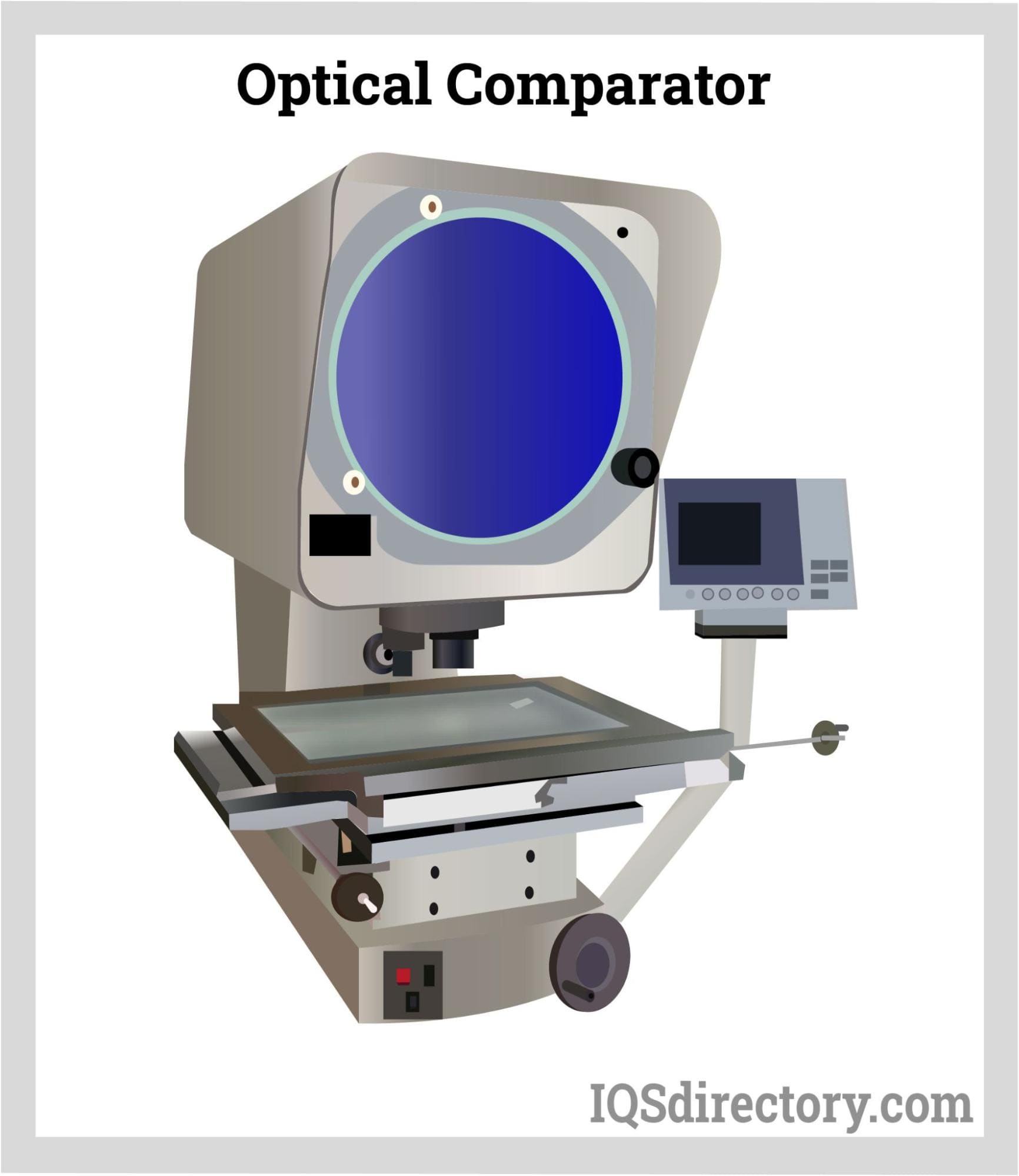
Optical inspection systems use advanced machine vision technology to meticulously examine objects and images. They read serial numbers on products at store checkout lines and inspect finished products on assembly lines, ensuring quality and accuracy. Similarly, optical sorting systems leverage machine vision but focus on efficiently sorting products by color, size, or type, making them indispensable in food processing, recycling, and pharmaceuticals.
Laser inspection systems elevate machine vision applications by incorporating laser beams and photoelectric sensors. This advanced combination scans images or items and produces detailed 3D reproductions. These systems perform a broad spectrum of inspections, including parts counting, product defect detection (even at the microscopic level), and scanning serial numbers and barcodes. Their precision and versatility make them indispensable in automotive, aerospace, and electronics manufacturing for surface profiling, weld inspection, and component alignment.
Smart cameras achieve superior image quality by integrating advanced processing circuitry with sophisticated imaging software. Despite their portability, these devices typically lack significant internal storage, requiring users to pair them with a primary system for optimal performance. Smart cameras are ideal for decentralized inspection, vision-guided robotics, and remote monitoring applications.
CCD cameras employ charge-coupled device (CCD) chips to convert photons into electrical or digital images. Once these machine vision cameras capture the photons, the images can be uploaded to a computer for further processing and storage. CCD cameras are valued for their high sensitivity and low noise, making them well-suited for scientific imaging, high-speed inspection, and low-light applications.
Magnetic imaging systems utilize magnetic materials to create visual representations of objects. By combining their inherent magnetism with an x-ray type sensor, these systems produce detailed images, providing a unique perspective for various applications, including non-destructive testing, material sorting, and security screening.
Robotic vision systems are sophisticated machine vehicles, such as automated guided vehicles (AGVs) and collaborative robots (cobots), designed to navigate industrial environments. These systems operate with a degree of semi-autonomy, relying on the visual data supplied by computer vision technology to maneuver through complex spaces. By integrating advanced imaging capabilities with autonomous navigation, these robotic vision systems enhance efficiency and precision in material handling, assembly, and palletizing tasks.
Interested in the best machine vision system for your application? Compare machine vision system types and find the ideal solution for your unique production environment.
Components of Machine Vision Systems
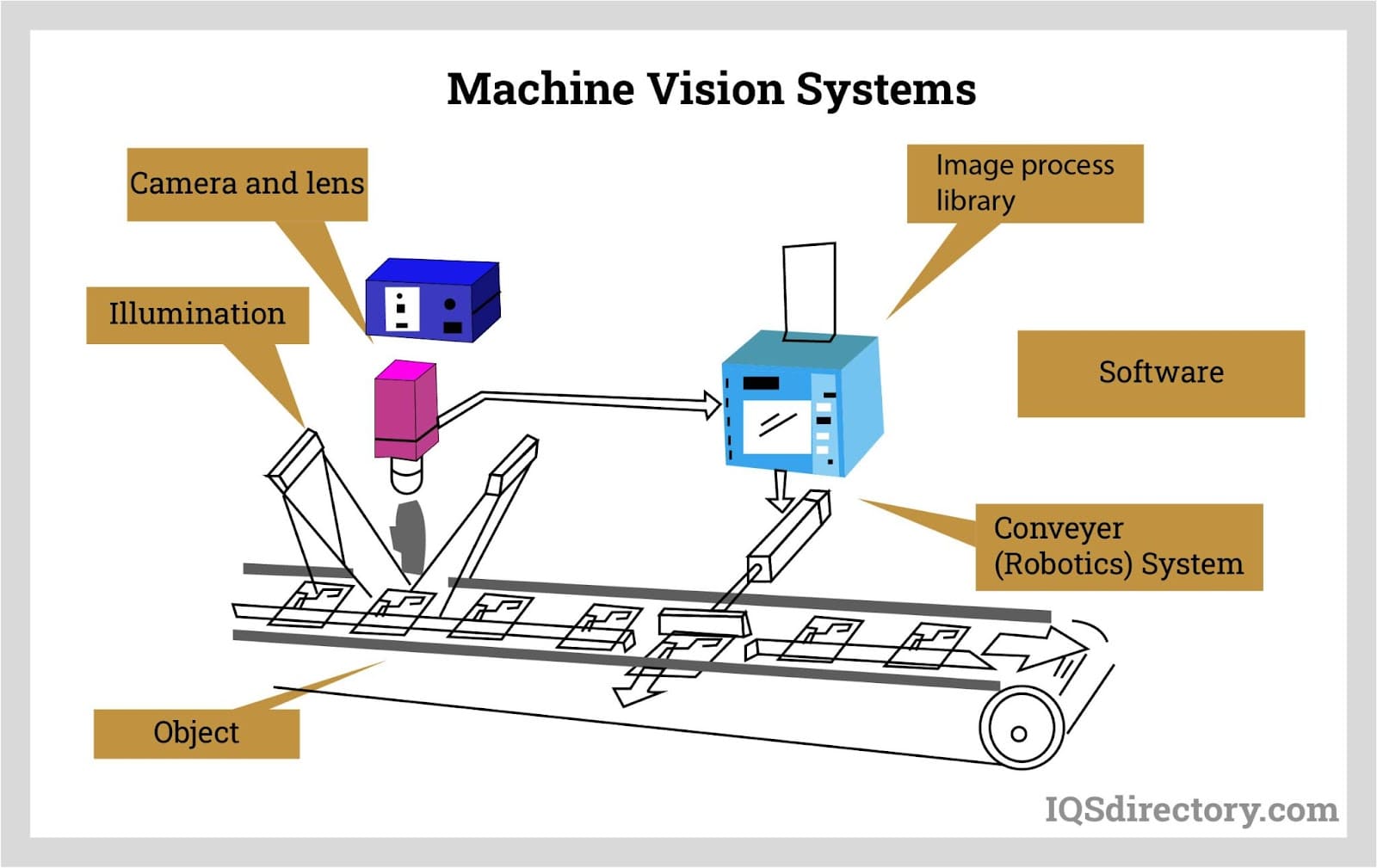
Although individual machine vision systems differ widely in their applications, they generally operate using the same core elements: vision sensors, illumination, an image capture device or digital camera (such as a smart camera or industrial camera), a computer processor, and specialized image processing software.
Vision sensors are integral components in modern industrial processes, primarily employed through a scanning-based triangulation method. In this approach, vision sensors initiate the vision-sensing sequence by detecting the presence and position of a product or component. This initial detection serves as the first critical step in acquiring an image, ensuring that the object of interest is correctly identified and located, essential for reliable machine vision performance.
Once the vision sensor confirms the presence of the product or component, it triggers the imaging device or camera, along with the synchronized lighting system. This synchronization is crucial as it produces a digital image that highlights the specific features of interest with precise illumination, thereby facilitating accurate analysis. Proper lighting—such as backlighting, coaxial, and diffuse illumination—is essential for achieving high-contrast, low-noise images.
The imaging device, often a sophisticated camera, can either be integrated with a computer processor or function independently. When combined, this unit is referred to as a smart sensor or smart camera, capable of processing data internally. If the imaging device operates separately, a specialized intermediate hardware device, known as a frame grabber, is employed. This device collects and converts the output from the imaging device, channeling it into the computer system as usable data.
Subsequently, the machine vision image processing software takes over. This software is designed to analyze the digital image, extracting relevant information and making precise decisions based on the visual data. Through this seamless integration of vision sensors, lighting, imaging devices, and processing software, modern machine vision systems achieve remarkable accuracy and efficiency in various industrial applications.
Additional machine vision components may include industrial PCs, network interfaces (such as GigE Vision or USB3 Vision), I/O modules for triggering and control, and custom optics for specialized inspection environments.
Need help designing a machine vision system? Contact experienced machine vision integrators for guidance on selecting and configuring system components for your specific inspection or automation needs.
Benefits of Machine Vision Systems
Investing in machine vision systems presents a range of significant benefits, positioning them as a superior solution for various industrial, commercial, and scientific tasks. These systems possess an extraordinary capability to continuously enhance their visual magnification, enabling them to examine minute details with far greater precision than human eyes ever could. This heightened ability to discern fine details ensures that inspections conducted using machine vision are substantially more accurate compared to those performed by humans.
In addition to their exceptional precision, machine vision systems operate with remarkable efficiency. Whether engaged in analyzing intricate patterns, inspecting for defects, or sorting products swiftly and accurately, these systems outperform human workers by maintaining consistent and high-speed performance. Their ability to function tirelessly and deliver reliable results makes them an indispensable asset in settings where accuracy and productivity are crucial.
- Enhanced Quality Assurance: Automated vision inspection reduces human error, ensures repeatable measurements, and enables 100% inspection coverage on every product.
- Reduced Operational Costs: By minimizing scrap, rework, and warranty claims, machine vision systems deliver substantial cost savings over time.
- Increased Throughput: High-speed inspection allows production lines to run faster without sacrificing quality, boosting overall productivity.
- Compliance and Traceability: Machine vision facilitates compliance with industry regulations (FDA, ISO, etc.) and supports traceability through automated data capture and storage.
- Labor Reallocation: By automating repetitive inspection tasks, skilled workers can focus on more value-added activities, improving workforce efficiency.
- Process Optimization: Real-time data from vision inspection enables process adjustments, continuous improvement, and predictive maintenance strategies.
Curious about the ROI of machine vision in your plant? Request case studies or cost-benefit analyses from leading machine vision suppliers to see proven results in similar applications.
Design of Machine Vision Systems
Creating the best machine vision solutions necessitates meticulous evaluation of application requirements and other crucial factors by system designers. These requirements dictate key aspects such as the number of system cameras, data storage capacity, processor speed, lighting techniques, optics selection, and the level of automation needed. To ensure optimal performance, engineers harmonize product speed with the system’s inspection rate, often utilizing calibration targets or test samples to establish proper program parameters and prevent distortion.
Additionally, they might create a prototype to develop a computerized model of an inspection system, encompassing precise materials and surface features. Designers also decide whether a separate system or a machine vision integrator approach is more suitable, especially for complex automation environments. By following this structured process and considering all necessary components, engineers craft custom machine vision systems and products tailored to specific application needs, maximizing performance, scalability, and return on investment.
Want to know what factors to consider when designing a custom machine vision system? Download a design checklist or request an application review from a knowledgeable vision system integrator.
Safety and Compliance for Machine Vision Systems
Renowned for its widely adopted machine vision service standards, the European Machine Vision Association (EMVA) ensures transparent data presentation and precise measurement procedures. Their adaptable programming supports seamless data sharing and system modifications across various platforms. EMVA’s collaboration with international standards organizations, including CMVU in China, JIIA in Japan, VDMA in Germany, and AIA in North America, enhances global interoperability and supports multinational manufacturing operations.
Furthermore, machine vision system operators can utilize GigE Vision, a global camera interface standard created by AIA, which enables cost-effective and efficient Ethernet communication while conserving gigabit usage. Compliance with standards such as CE, UL, FCC, RoHS, and industry-specific requirements ensures that machine vision systems can be safely and reliably deployed in regulated environments worldwide.
Have questions about safety certifications or compliance for vision systems? Consult with machine vision experts to ensure your solution meets regulatory requirements in your industry.
Things to Consider
The profitability of the machine vision service market has led to a surge of suppliers. To secure the best and most dependable products and services, it is crucial to choose a seasoned and reliable supplier. Such a partner should offer solutions that meet your application needs, support integration with your existing automation infrastructure, and stay within your budget.
Consider factors such as technical support, software update policies, system scalability, ease of integration, user training, and post-installation service when evaluating machine vision suppliers. Look for vendors with a proven track record in your industry, robust reference projects, and flexible customization options.
To streamline your search, we have curated a list of leading machine vision suppliers. Their information is available midway down this page. Explore their comprehensive services and solutions, then identify three or four suppliers that fit your requirements. Initiate contact with each to discuss your applications. After these discussions, select the supplier that provides the most effective vision solutions for your needs.
Ready to start your machine vision project? Contact top machine vision manufacturers for quotes, sample applications, and technical consultations to ensure the best fit for your operation.
What is the primary objective of machine vision software?
The primary objective of machine vision software is to meticulously analyze and evaluate objects by counting, measuring, identifying, or inspecting them against specific standards set by their developers. It also provides workers with intuitive interfaces to monitor and assess production progress efficiently.
How do machine vision systems improve quality control in manufacturing?
Machine vision systems automate the inspection and sorting of goods on production lines, ensuring that each product meets specific criteria such as shape, size, color, and material. This results in more consistent, objective, and accurate quality assurance while reducing human error and increasing throughput.
What are the main types of machine vision systems?
Main types of machine vision systems include optical inspection systems, laser inspection systems, smart cameras, CCD cameras, magnetic imaging systems, and robotic vision systems such as AGVs and cobots. Each type is tailored for specific applications like 3D profiling, barcode reading, material sorting, and automated navigation.
What are the key components of a machine vision system?
Key components of a machine vision system include vision sensors, illumination, image capture devices or cameras, a computer processor, and specialized image processing software. Additional elements may include industrial PCs, network interfaces, I/O modules, and custom optics.
What are some common vision processing techniques used in machine vision?
Common vision processing techniques include stitching (registration), thresholding, pixel counting, segmentation, edge detection, color analysis, blob discovery, neural network processing, deep learning, pattern recognition, optical character recognition (OCR), barcode reading, morphological filtering, and gauging/metrology.
What are the benefits of using machine vision systems?
Benefits of machine vision systems include enhanced quality assurance, reduced operational costs, increased throughput, improved compliance and traceability, labor reallocation to higher-value tasks, and process optimization through real-time data analysis and predictive maintenance.
What factors should be considered when selecting a machine vision supplier?
When selecting a machine vision supplier, consider their technical support, software update policies, system scalability, ease of integration, user training, post-installation services, industry experience, reference projects, and customization options.